
If you’ve been researching ways to improve your gut health, you’ve probably come across the terms prebiotics and probiotics. They often appear together in articles, supplement labels, and wellness discussions, leading many people to assume they’re the same thing.
They’re not.
Understanding the difference between prebiotics and probiotics can help you make smarter choices for your digestive health. While both support a healthy gut microbiome, they work in completely different ways.
So when it comes to prebiotics vs probiotics, which one is more important? Do you need both? And how can you get them naturally through food?
Let’s break it down in simple terms.
Prebiotics vs Probiotics: The Quick Answer
The easiest way to understand prebiotics vs probiotics is this:
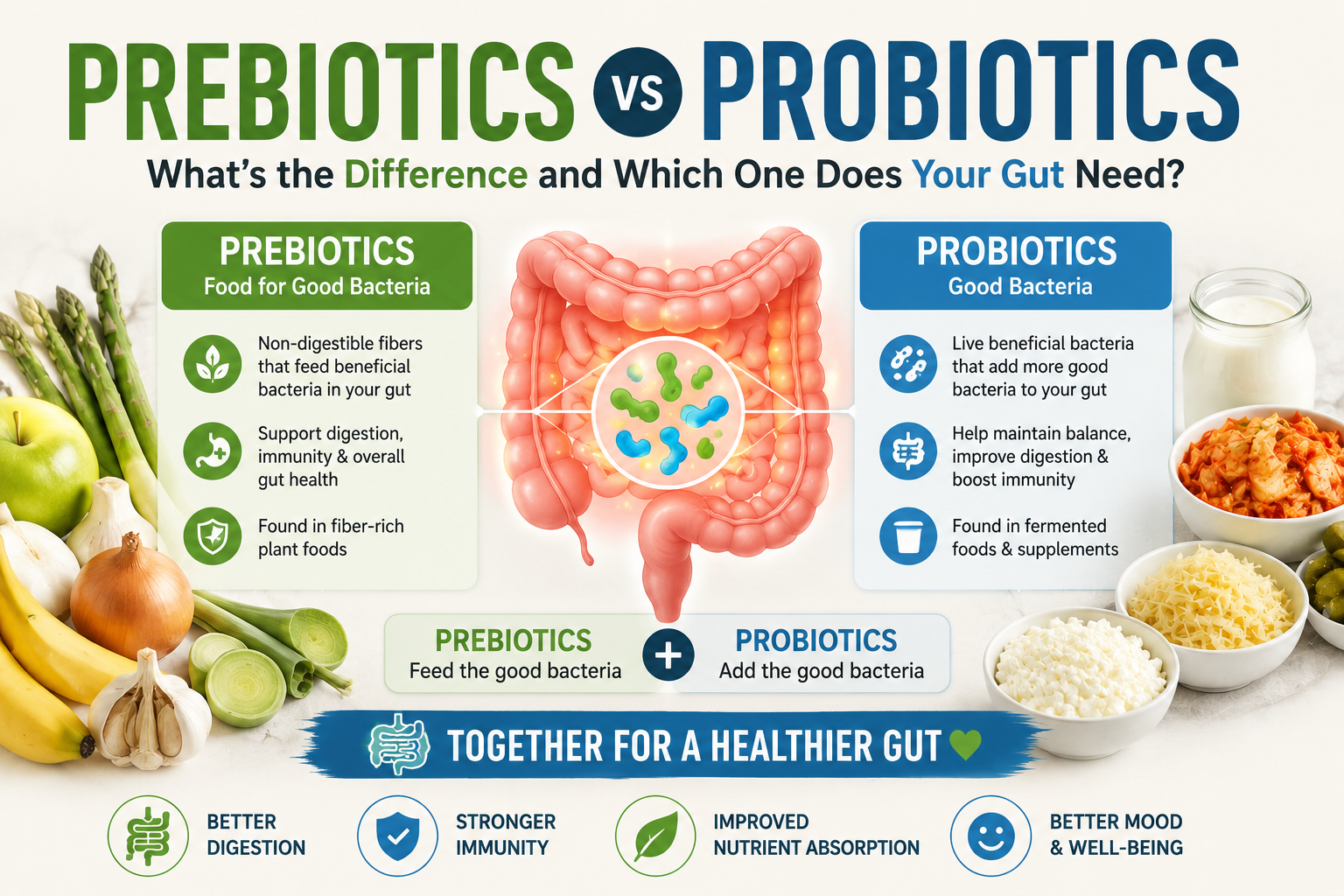
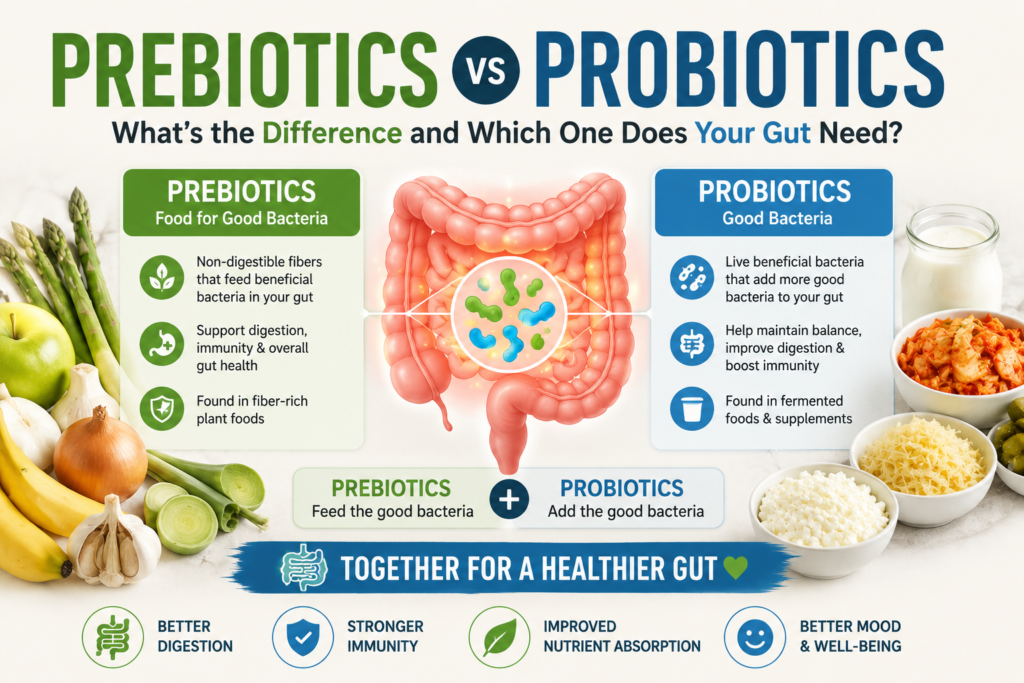
- Probiotics are the beneficial bacteria that live in your gut.
- Prebiotics are the food that feeds those beneficial bacteria.
Think of your gut like a garden.
The probiotics are the plants you want to grow, while prebiotics are the fertilizer that helps them thrive.
Without enough prebiotics, probiotics may struggle to survive. Without probiotics, there are fewer beneficial bacteria to support digestive health.
That’s why many experts consider both essential for a balanced gut microbiome.
What Are Prebiotics?
Prebiotics are types of dietary fiber that your body cannot fully digest.
Instead of being broken down in the stomach, they travel to the large intestine where they become food for beneficial gut bacteria.
As these bacteria ferment prebiotics, they produce compounds known as short-chain fatty acids, which may help support digestive health and maintain a healthy gut environment.
Common Sources of Prebiotics
Many everyday foods naturally contain prebiotics, including:
- Garlic
- Onions
- Leeks
- Bananas
- Asparagus
- Chicory root
- Oats
- Apples
- Barley
- Legumes
Eating a variety of plant-based foods is one of the simplest ways to increase your prebiotic intake.
What Are Probiotics?
Probiotics are live microorganisms that can provide health benefits when consumed in adequate amounts.
These beneficial bacteria naturally exist in your digestive system, but they can also be found in fermented foods and supplements.
The goal of probiotics is to help maintain a healthy balance of microorganisms in the gut.
Common Sources of Probiotics
Foods rich in probiotics include:
- Yogurt with live cultures
- Kefir
- Kimchi
- Sauerkraut
- Miso
- Tempeh
- Certain fermented pickles
Many probiotic supplements are also available, although not all strains provide the same benefits.
Prebiotics vs Probiotics: Key Differences
Understanding the difference between prebiotics and probiotics becomes easier when comparing them side by side.
| Prebiotics | Probiotics |
|---|---|
| Types of fiber | Live beneficial bacteria |
| Feed healthy gut microbes | Add beneficial microbes to the gut |
| Found mainly in plant foods | Found mainly in fermented foods |
| Help support existing gut bacteria | Help increase beneficial bacteria |
| Naturally present in fruits, vegetables, and grains | Naturally present in fermented products |
Although they serve different functions, both play an important role in supporting gut health.
Why Gut Health Matters
The growing interest in prebiotics vs probiotics comes from increased awareness of the gut microbiome.
Scientists continue to study how gut bacteria may influence:
- Digestion
- Immune function
- Metabolism
- Inflammation
- Nutrient absorption
- Mental wellness
A healthy gut microbiome contains a diverse range of beneficial microorganisms that help maintain balance within the digestive system.
When that balance is disrupted, some people may experience symptoms such as:
- Bloating
- Gas
- Constipation
- Diarrhea
- Digestive discomfort
Supporting gut bacteria through diet is one way to encourage a healthier digestive environment.
Are Prebiotics or Probiotics Better for Gut Health?
One of the most common questions people ask is whether prebiotics or probiotics are better.
The truth is that it isn’t really a competition.
When discussing prebiotics vs probiotics, experts generally view them as complementary rather than competing nutrients.
Probiotics introduce beneficial bacteria.
Prebiotics help those bacteria survive and flourish.
If you only consume probiotics but don’t provide enough prebiotic-rich foods, those beneficial microbes may not receive the nutrients they need.
Likewise, feeding gut bacteria with prebiotics is less effective if your microbial diversity is already limited.
For most people, combining both is the most practical approach.
Can You Take Prebiotics and Probiotics Together?
Yes.
In fact, many health professionals recommend consuming both as part of a balanced diet.
Products that combine prebiotics and probiotics are often referred to as synbiotics.
The idea behind synbiotics is simple:
- Probiotics add beneficial bacteria.
- Prebiotics help nourish those bacteria.
This combination may help support long-term gut health more effectively than either one alone.
Signs You May Need More Prebiotics and Probiotics
While there’s no simple test that tells you exactly how much you need, some signs may suggest your diet lacks gut-friendly foods.
These include:
- Frequent bloating
- Irregular bowel movements
- Low fiber intake
- Heavy consumption of processed foods
- Digestive discomfort
- Limited fruit and vegetable consumption
Increasing both prebiotic and probiotic foods may help improve overall dietary quality.
Best Foods That Contain Both Prebiotics and Probiotics
Building a gut-friendly plate doesn’t have to be complicated.
A simple meal could include:
- Yogurt with bananas and oats
- Kefir smoothie with berries
- Sauerkraut served with vegetables
- Miso soup alongside fiber-rich foods
- Kimchi paired with whole grains
This approach naturally combines probiotics with the fibers that help support them.
Common Mistakes People Make
When focusing on prebiotics vs probiotics, many people make the mistake of relying solely on supplements.
While supplements can be useful in certain situations, they shouldn’t replace a healthy diet.
Other common mistakes include:
- Ignoring fiber intake
- Expecting overnight results
- Following restrictive gut health diets
- Avoiding entire food groups unnecessarily
- Consuming fermented foods while neglecting fruits and vegetables
Gut health improvements typically happen gradually through consistent dietary habits.
The Bottom Line on Prebiotics vs Probiotics
When comparing prebiotics vs probiotics, it’s important to remember that both serve different but equally valuable roles.
Probiotics are the beneficial bacteria that support your digestive system, while prebiotics are the nutrients that help those bacteria thrive.
Rather than choosing one over the other, focus on incorporating both into your daily routine through whole foods.
Eating more fruits, vegetables, legumes, whole grains, yogurt, kefir, and fermented foods can naturally support a healthier gut microbiome.
The most effective gut health strategy isn’t about finding a miracle supplement. It’s about consistently feeding your body the nutrients that beneficial bacteria need to flourish.
That’s where both prebiotics and probiotics truly shine.