
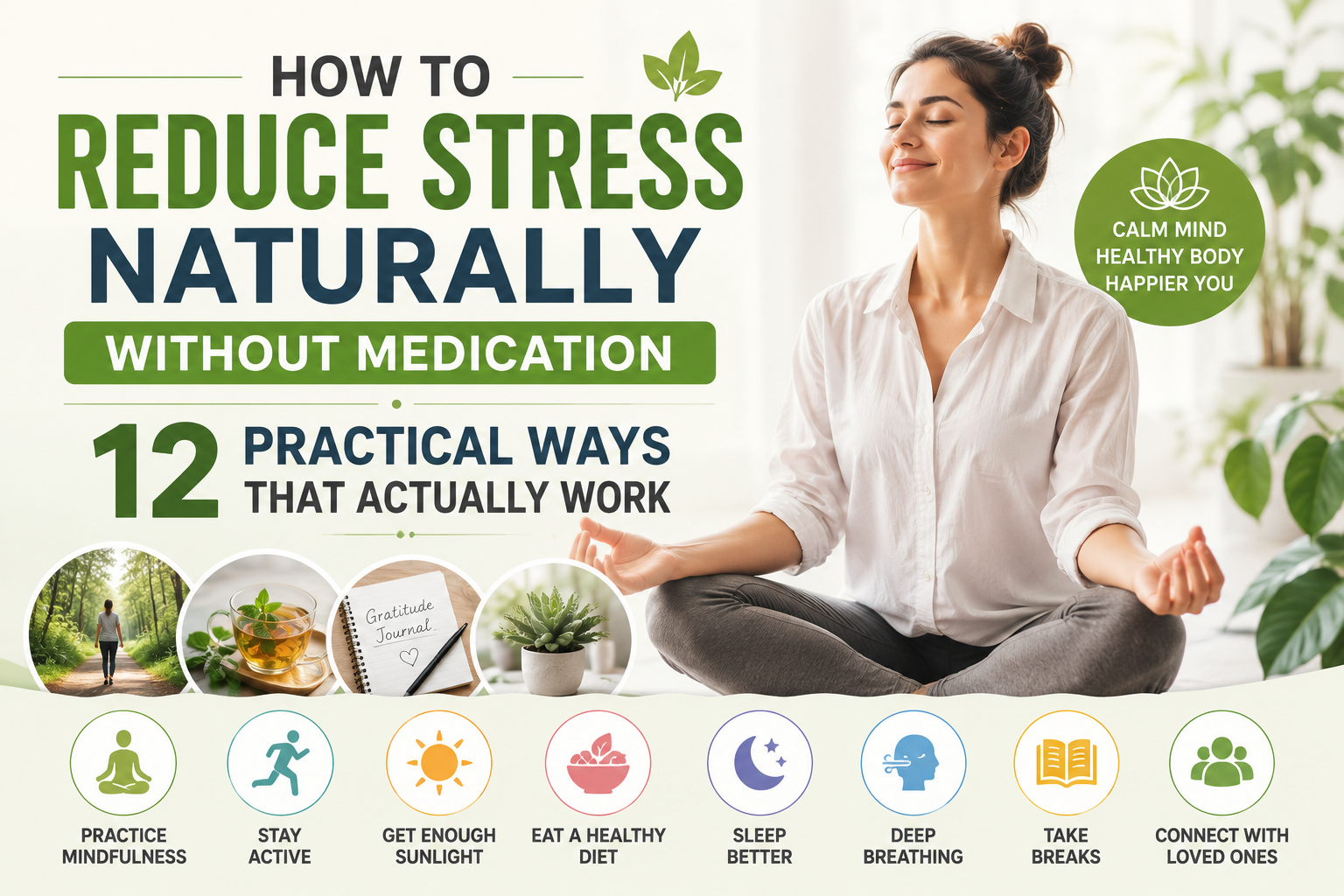
Stress has become a normal part of modern life. Between work deadlines, financial pressures, family responsibilities, and the constant stream of notifications on our phones, it’s easy to feel overwhelmed. While occasional stress is a natural response to challenges, chronic stress can affect both your physical and mental well-being.
The good news is that not every stressful situation requires medication. Many people successfully manage daily stress through simple lifestyle changes and healthy habits.
If you’ve been searching for how to reduce stress naturally without medication, this guide covers practical, science-backed strategies that can help you feel calmer, more focused, and better equipped to handle life’s challenges.
Why Managing Stress Matters
Stress isn’t just a mental burden. It can affect nearly every system in the body.
When stress becomes chronic, it may contribute to:
- Difficulty sleeping
- Low energy levels
- Headaches
- Digestive discomfort
- Increased irritability
- Trouble concentrating
- Muscle tension
- Elevated blood pressure
Learning how to reduce stress naturally without medication can improve not only your mood but also your overall quality of life.
1. Move Your Body Every Day
One of the most effective ways to manage stress is regular physical activity.
Exercise helps your body release endorphins, often referred to as “feel-good” chemicals. These natural compounds can improve mood and help reduce feelings of stress and tension.
You don’t need intense workouts to see benefits.
Simple activities such as:
- Walking
- Cycling
- Swimming
- Yoga
- Dancing
can help clear your mind and improve emotional well-being.
Even a 20-minute walk can make a noticeable difference.
2. Prioritize Quality Sleep
Sleep and stress have a close relationship.
Stress can make it difficult to sleep, while poor sleep can make stressful situations feel even more overwhelming.
To improve sleep quality:
- Maintain a consistent bedtime
- Limit screen time before bed
- Keep your bedroom cool and dark
- Avoid caffeine late in the day
When looking at how to reduce stress naturally without medication, improving sleep is often one of the most impactful changes you can make.
3. Practice Deep Breathing
Deep breathing is one of the fastest ways to calm the body’s stress response.
When you’re stressed, breathing often becomes shallow and rapid. Slowing your breathing can help signal to your nervous system that you’re safe and relaxed.
Try this simple technique:
- Inhale slowly through your nose for four seconds.
- Hold for four seconds.
- Exhale gently for six seconds.
- Repeat several times.
This practice can be done almost anywhere and takes only a few minutes.
4. Reduce Excessive Screen Time
Technology has many benefits, but constant exposure to news, emails, and social media can increase stress levels.
Many people unknowingly stay in a state of mental stimulation throughout the day.
Consider:
- Taking breaks from social media
- Turning off unnecessary notifications
- Setting screen-free periods during the day
- Avoiding doomscrolling before bedtime
Creating healthier boundaries with technology can have a surprisingly positive impact on mental wellness.
5. Spend More Time Outdoors
Nature has a calming effect that many people underestimate.
Research continues to suggest that spending time outdoors may help reduce stress and improve mood.
You don’t need a weekend camping trip to benefit.
Simple options include:
- Walking in a local park
- Gardening
- Sitting outside with a book
- Taking your lunch break outdoors
Fresh air and natural surroundings can provide a valuable mental reset.
6. Stay Connected With People You Trust
Stress often feels heavier when you carry it alone.
Talking with friends, family members, or supportive colleagues can provide perspective and emotional relief.
You don’t always need advice. Sometimes simply sharing your thoughts with someone who listens can make a stressful situation feel more manageable.
Strong social connections remain one of the most effective tools for emotional resilience.
7. Limit Caffeine If You’re Feeling Anxious
Caffeine affects everyone differently.
For some people, excessive caffeine intake can increase feelings of nervousness, restlessness, and anxiety.
If you’re frequently stressed, consider evaluating how much caffeine you’re consuming through:
- Coffee
- Energy drinks
- Pre-workout supplements
- Certain teas
Reducing intake may help some people feel calmer throughout the day.
8. Try Mindfulness or Meditation
Mindfulness has become increasingly popular, and for good reason.
Mindfulness encourages you to focus on the present moment rather than dwelling on past events or worrying about the future.
You don’t need to meditate for an hour each day.
Even five to ten minutes of focused breathing or guided meditation can help create a sense of calm.
For people exploring how to reduce stress naturally without medication, mindfulness is often a useful place to start.
9. Eat a Balanced Diet
What you eat can influence how you feel.
While no food can completely eliminate stress, a balanced diet supports overall physical and mental health.
Focus on:
- Fruits
- Vegetables
- Whole grains
- Lean proteins
- Healthy fats
At the same time, try to limit excessive amounts of highly processed foods and added sugars.
Stable energy levels can help make stressful situations easier to manage.
10. Learn to Say No
Many people experience stress because they consistently take on more responsibilities than they can realistically handle.
Protecting your time and energy isn’t selfish—it’s necessary.
Learning to say no when your schedule is already full can reduce overwhelm and prevent burnout.
Healthy boundaries are an important part of stress management.
11. Make Time for Activities You Enjoy
When life gets busy, hobbies are often the first thing people sacrifice.
Ironically, those enjoyable activities are often exactly what help reduce stress.
Whether it’s reading, painting, cooking, photography, music, or gardening, spending time on activities you genuinely enjoy can provide a mental break from daily pressures.
Pleasure and relaxation deserve a place on your schedule.
12. Focus on What You Can Control
One of the biggest sources of stress is worrying about things outside your control.
You can’t control the economy, other people’s actions, or every unexpected challenge life throws your way.
What you can control is how you respond.
When you feel overwhelmed, ask yourself:
“What action can I take right now?”
Focusing on small, manageable steps often reduces feelings of helplessness.
Common Mistakes People Make When Managing Stress
While learning how to reduce stress naturally without medication, many people fall into habits that actually increase stress levels.
These include:
- Ignoring sleep
- Skipping meals
- Overworking without breaks
- Excessive alcohol consumption
- Constant multitasking
- Spending too much time on social media
Recognizing these patterns is often the first step toward making healthier choices.
When to Seek Professional Help
Natural stress management techniques can be incredibly helpful, but they’re not always enough.
If stress becomes overwhelming, persistent, or begins interfering with daily life, speaking with a healthcare professional or mental health specialist is important.
Seeking help is a sign of strength, not weakness.
Support is available, and you don’t have to navigate difficult periods alone.
Final Thoughts
If you’re wondering how to reduce stress naturally without medication, remember that small changes often have the biggest long-term impact.
Regular exercise, quality sleep, healthy eating, mindfulness, social connection, and time spent outdoors can all contribute to lower stress levels and improved well-being.
The goal isn’t to eliminate stress completely. That’s impossible. Instead, focus on building habits that help you respond to stress in a healthier way.
Over time, these simple practices can help you feel more balanced, resilient, and in control of your everyday life.