
Millions of people struggle to get quality sleep. Some have trouble falling asleep, while others wake up multiple times during the night and never feel fully rested in the morning. As sleep issues become more common, many people are turning to supplements for help. Two of the most popular options are magnesium and melatonin.
But when it comes to magnesium vs melatonin for better sleep, which one actually works better?
The answer depends on what’s causing your sleep problems in the first place. While both supplements are widely used to support sleep, they work in very different ways. Understanding those differences can help you make a more informed decision.
In this guide, we’ll compare magnesium and melatonin, explore their benefits, potential drawbacks, and help you determine which option may be better for your sleep needs.
What Is Magnesium?
Magnesium is an essential mineral involved in hundreds of processes throughout the body. It plays a role in muscle function, nerve signaling, blood sugar regulation, and energy production.
Magnesium is also closely linked to relaxation. It helps regulate neurotransmitters that calm the nervous system and supports healthy muscle function, making it an important nutrient for sleep.
Many people don’t get enough magnesium from their diet, which is one reason magnesium supplements have become increasingly popular.
Natural Sources of Magnesium
You can find magnesium in foods such as:
- Spinach
- Almonds
- Pumpkin seeds
- Cashews
- Black beans
- Avocados
- Dark chocolate
- Whole grains
Although food should always be the primary source, some people choose supplements if they struggle to meet their daily needs.
What Is Melatonin?
Melatonin is a hormone naturally produced by the brain. Its main job is to regulate your sleep-wake cycle, also known as your circadian rhythm.
Melatonin levels typically rise in the evening as darkness approaches and decrease in the morning when you’re exposed to light.
Melatonin supplements are designed to mimic this natural process and signal to the body that it’s time to sleep.
Because of this, melatonin is commonly used by people who:
- Have trouble falling asleep
- Experience jet lag
- Work night shifts
- Have irregular sleep schedules
Unlike magnesium, melatonin is not a mineral or nutrient. It’s a hormone directly involved in sleep timing.
Read more Magnesium Baths Before Bed — Do They Actually Help You Sleep Better
Magnesium vs Melatonin for Better Sleep: The Main Difference
The biggest difference between magnesium and melatonin lies in how they affect the body.
Magnesium Supports Relaxation
Magnesium helps calm the nervous system and may promote relaxation before bedtime.
People who experience stress, muscle tension, restless feelings, or magnesium deficiency may notice improvements in sleep quality when magnesium intake is optimized.
Melatonin Supports Sleep Timing
Melatonin helps regulate when your body feels sleepy.
If your internal clock is disrupted due to travel, shift work, excessive screen time, or inconsistent sleep schedules, melatonin may help your body adjust.
In simple terms:
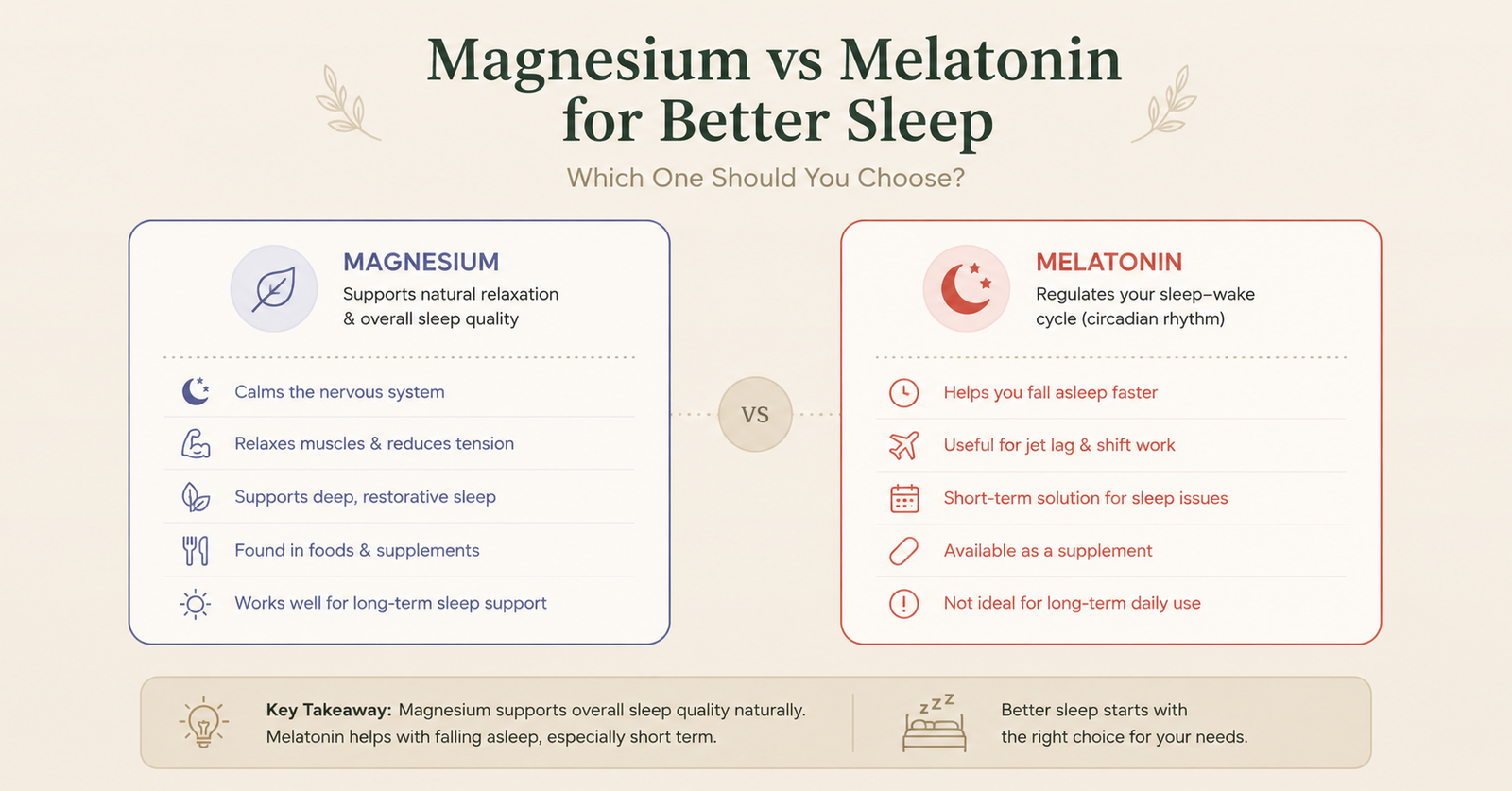
- Magnesium helps your body relax.
- Melatonin helps your body know when it’s time to sleep.
Magnesium vs Melatonin for Falling Asleep
If your biggest challenge is falling asleep at night, melatonin often receives more attention because it directly influences your sleep cycle.
For example, if you stay awake for hours despite feeling tired, melatonin may help signal that it’s time to sleep.
However, sleep problems aren’t always caused by circadian rhythm issues.
Many people struggle to fall asleep because of:
- Stress
- Anxiety
- Racing thoughts
- Muscle tension
- Excess caffeine consumption
In those situations, magnesium may provide more noticeable benefits by supporting relaxation rather than directly affecting sleep timing.
Magnesium vs Melatonin for Staying Asleep
Staying asleep is a different challenge altogether.
Some people fall asleep quickly but wake up repeatedly throughout the night.
Magnesium may be particularly helpful for those who experience nighttime muscle discomfort, stress-related sleep interruptions, or poor sleep quality.
Melatonin can help some people stay asleep, but its primary function is helping regulate the sleep-wake cycle rather than preventing awakenings during the night.
Benefits of Magnesium for Sleep
When comparing magnesium vs melatonin for better sleep, magnesium offers several potential advantages.
May Promote Relaxation
Magnesium supports neurotransmitters involved in calming the nervous system.
Supports Muscle Function
Muscle tension can interfere with restful sleep. Magnesium helps support normal muscle function and relaxation.
May Improve Sleep Quality
Some people report feeling more refreshed after increasing magnesium intake, especially if they were previously deficient.
Supports Overall Health
Beyond sleep, magnesium contributes to heart health, bone health, energy production, and normal nerve function.
Benefits of Melatonin for Sleep
Melatonin also offers unique advantages.
Helps Reset the Body Clock
Melatonin can be useful when your sleep schedule is out of sync.
May Help with Jet Lag
Traveling across time zones often disrupts natural sleep patterns. Melatonin is commonly used to ease the adjustment.
Supports Faster Sleep Onset
Many people take melatonin specifically because it may help them fall asleep more quickly.
Useful for Shift Workers
People who work irregular hours often use melatonin to help regulate sleep timing.
Potential Side Effects
No supplement is completely risk-free.
Magnesium Side Effects
High doses may cause:
- Digestive discomfort
- Loose stools
- Stomach upset
Following label directions and consulting a healthcare professional is important.
Melatonin Side Effects
Some people experience:
- Morning grogginess
- Dizziness
- Headaches
- Vivid dreams
Effects can vary depending on dosage and individual sensitivity.
Read more How to Reduce Stress Naturally Without Medication: 12 Practical Ways That Actually Work
Can You Take Magnesium and Melatonin Together?
Many people wonder whether they have to choose one or the other.
In some cases, magnesium and melatonin are used together because they serve different functions.
Magnesium may help the body relax, while melatonin supports the sleep-wake cycle.
However, combining supplements isn’t necessary for everyone, and it’s always wise to seek medical guidance if you have health conditions or take medications.
Magnesium vs Melatonin for Better Sleep: Which Is Better?
There isn’t a universal winner in the magnesium vs melatonin for better sleep debate.
The best option depends on the underlying cause of your sleep difficulties.
Magnesium May Be Better If:
- You feel stressed before bed
- You experience muscle tension
- Your diet is low in magnesium-rich foods
- You want broader health benefits beyond sleep
Melatonin May Be Better If:
- You have an irregular sleep schedule
- You experience jet lag
- You struggle with sleep timing
- You need help adjusting your circadian rhythm
For some people, improving sleep hygiene may be just as important as taking any supplement.
Natural Ways to Improve Sleep Without Supplements
Before relying on supplements, consider these habits:
- Maintain a consistent bedtime
- Reduce screen exposure before sleep
- Limit caffeine later in the day
- Keep your bedroom cool and dark
- Exercise regularly
- Avoid heavy meals before bedtime
These habits often have a bigger long-term impact on sleep quality than supplements alone.
Final Thoughts
When comparing magnesium vs melatonin for better sleep, the right choice depends on your individual sleep challenges.
Magnesium supports relaxation and may improve overall sleep quality, especially for people dealing with stress or inadequate magnesium intake. Melatonin, on the other hand, helps regulate the body’s internal clock and may be more useful for people struggling with sleep timing, jet lag, or irregular schedules.
Rather than looking for a quick fix, focus on identifying what’s disrupting your sleep. Pairing healthy sleep habits with the right approach can often lead to better, more consistent rest over time.
The goal isn’t simply to fall asleep faster—it’s to wake up feeling genuinely refreshed.