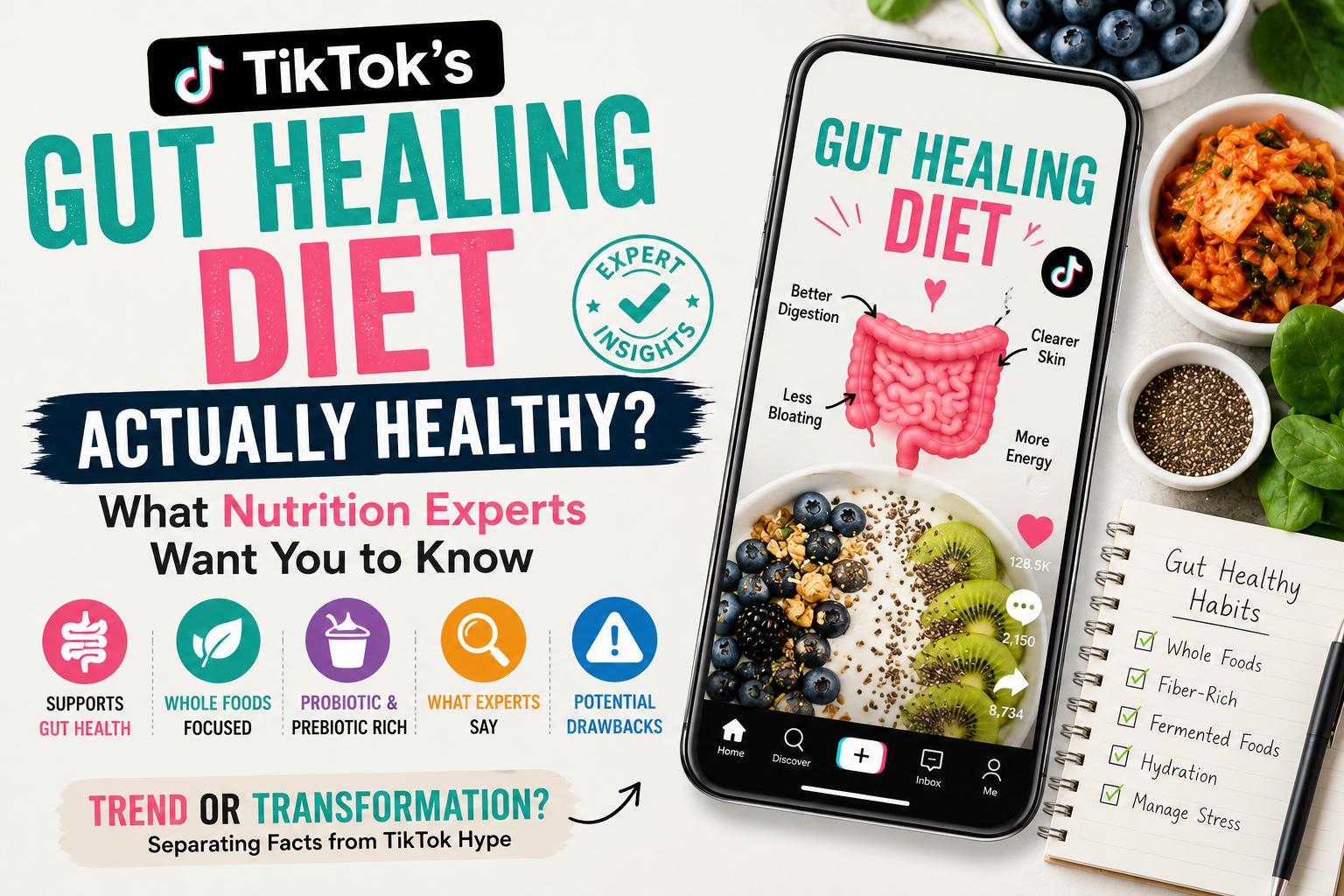
Social media has a way of turning complex health topics into simple trends, and gut health is the latest example. Over the past year, videos tagged with “gut healing diet” have generated millions of views on TikTok. Influencers share before-and-after photos, daily meal plans, and claims that healing your gut can improve digestion, clear your skin, boost energy, reduce bloating, and even improve mental health.
But is TikTok’s gut healing diet actually healthy, or is it another wellness trend that’s oversimplifying nutrition?
The truth lies somewhere in the middle. While some gut health advice circulating on TikTok is supported by science, other recommendations can be restrictive, misleading, or simply unnecessary for most people.
Let’s take a closer look at what the gut healing diet is, what it gets right, and what you should be cautious about before following the trend.
What Is the Gut Healing Diet?
The term “gut healing diet” doesn’t refer to a single eating plan. Instead, it’s a collection of dietary habits designed to support the gut microbiome—the trillions of bacteria, fungi, and other microorganisms living in your digestive system.
Most TikTok creators promoting a gut healing diet recommend:
- Eating more fruits and vegetables
- Increasing fiber intake
- Consuming fermented foods
- Avoiding ultra-processed foods
- Reducing added sugars
- Drinking more water
- Limiting alcohol consumption
At first glance, these recommendations seem reasonable. In fact, many align with what nutrition experts have advised for years.
The problem begins when influencers claim that specific foods, supplements, or restrictive diets can “repair” your gut in just a few days.
Why Gut Health Matters
Your digestive system does much more than process food.
Research continues to show that gut health may influence:
- Digestion
- Immune function
- Metabolism
- Mood and mental wellness
- Inflammation levels
- Nutrient absorption
A healthy gut microbiome contains a diverse mix of beneficial bacteria that help maintain balance within the body.
When this balance is disrupted, some people may experience symptoms such as:
- Bloating
- Constipation
- Diarrhea
- Excess gas
- Digestive discomfort
- Fatigue
This connection between gut health and overall wellness is one reason why the gut healing diet has become so popular online.
What TikTok Gets Right About the Gut Healing Diet
Not everything on social media is misinformation.
Several common gut healing diet recommendations are supported by scientific evidence.
1. Eating More Fiber Supports Gut Health
Fiber is one of the most important nutrients for maintaining a healthy gut microbiome.
Foods rich in fiber include:
- Oats
- Beans
- Lentils
- Apples
- Berries
- Vegetables
- Whole grains
Beneficial gut bacteria feed on fiber and produce compounds that help support digestive health.
Unfortunately, many people consume far less fiber than recommended, making this one of the most valuable changes you can make.
2. Fermented Foods Can Be Beneficial
Many gut health influencers encourage consuming fermented foods such as:
- Yogurt
- Kefir
- Kimchi
- Sauerkraut
- Miso
These foods contain beneficial microorganisms that may contribute to microbial diversity within the gut.
Adding fermented foods to a balanced diet can be a practical way to support digestive health.
3. Reducing Ultra-Processed Foods Makes Sense
A diet heavily dependent on highly processed foods often lacks fiber and other nutrients that support gut bacteria.
Replacing some processed snacks with whole foods can benefit not only your digestive system but your overall health as well.
Where the Gut Healing Diet Trend Goes Wrong
While some advice is helpful, many viral videos exaggerate what diet alone can achieve.
Gut Health Is More Complicated Than TikTok Suggests
Many creators imply that every symptom—from acne to anxiety—is caused by poor gut health.
In reality, health issues are rarely that simple.
Digestive symptoms can result from:
- Food intolerances
- Stress
- Medical conditions
- Hormonal changes
- Medication use
- Lifestyle factors
Assuming your gut is responsible for every problem may delay proper medical evaluation.
Quick Fixes Rarely Work
One of the biggest red flags is the promise of rapid transformation.
You may see videos claiming:
- Heal your gut in 3 days
- Reset your microbiome in a week
- Eliminate bloating instantly
The gut microbiome is incredibly complex and changes gradually over time.
Sustainable improvements typically come from consistent dietary and lifestyle habits rather than short-term detoxes.
Some Gut Healing Diets Are Too Restrictive
Certain TikTok plans eliminate entire food groups without medical necessity.
Examples include avoiding:
- Dairy
- Gluten
- Legumes
- Grains
- Fruits
Unless recommended by a healthcare professional, unnecessarily restrictive diets may increase the risk of nutrient deficiencies and create an unhealthy relationship with food.
Foods That Actually Support a Healthy Gut
If your goal is to improve gut health naturally, focus on dietary patterns rather than trendy cleanses.
Some of the best foods for gut health include:
Fiber-Rich Foods
- Oats
- Barley
- Beans
- Lentils
- Chickpeas
Fruits
- Bananas
- Apples
- Pears
- Berries
Vegetables
- Broccoli
- Carrots
- Spinach
- Brussels sprouts
Fermented Foods
- Yogurt
- Kefir
- Kimchi
- Sauerkraut
Healthy Fats
- Avocados
- Nuts
- Seeds
- Olive oil
A varied diet often does more for your microbiome than any expensive supplement.
Lifestyle Habits That Improve Gut Health
The conversation around gut health often focuses only on food, but lifestyle factors matter too.
Prioritize Sleep
Poor sleep may negatively affect gut bacteria and overall health.
Aim for consistent sleep schedules whenever possible.
Manage Stress
Chronic stress can affect digestion and alter gut function.
Activities such as walking, meditation, deep breathing, and exercise may help.
Stay Physically Active
Regular movement supports digestive function and may contribute to a healthier microbiome.
Even a daily 30-minute walk can make a difference.
Should You Follow TikTok’s Gut Healing Diet?
The answer depends on which version you’re seeing.
If the advice encourages eating more fiber, consuming fermented foods, drinking water, and reducing ultra-processed foods, there’s likely value in those recommendations.
However, be skeptical of content that promises dramatic results, promotes expensive supplements, or encourages highly restrictive eating patterns.
Gut health is important, but it isn’t a magic solution for every health concern.
The healthiest approach is usually the least exciting one: a balanced diet, consistent habits, adequate sleep, stress management, and regular physical activity.
Final Thoughts
TikTok’s gut healing diet trend has helped bring attention to an important aspect of health that many people previously ignored. That’s a positive development.
However, not all gut health advice on social media is created equal.
Supporting your gut doesn’t require expensive products, extreme cleanses, or cutting out entire food groups. Instead, focus on eating a diverse range of whole foods, getting enough fiber, prioritizing sleep, and maintaining healthy daily habits.
When it comes to gut health, consistency beats viral hacks every time.