
A few years ago, almost nobody outside of microbiome research labs had heard the word Akkermansia. Today it’s showing up in gut health podcasts, supplement marketing, and increasingly, in serious medical journals. That trajectory alone is worth being a little suspicious of — wellness trends move fast, and not all of them are built on solid ground.
This one, though, holds up better than most. Akkermansia muciniphila isn’t a passing trend invented by a supplement brand. It’s a real, well-studied bacterium that researchers have been investigating for over a decade, and the evidence behind it has gotten substantially stronger in just the past two years. Here’s what it actually is, what the research genuinely shows, and where the science is still catching up to the marketing.
What Akkermansia Actually Is
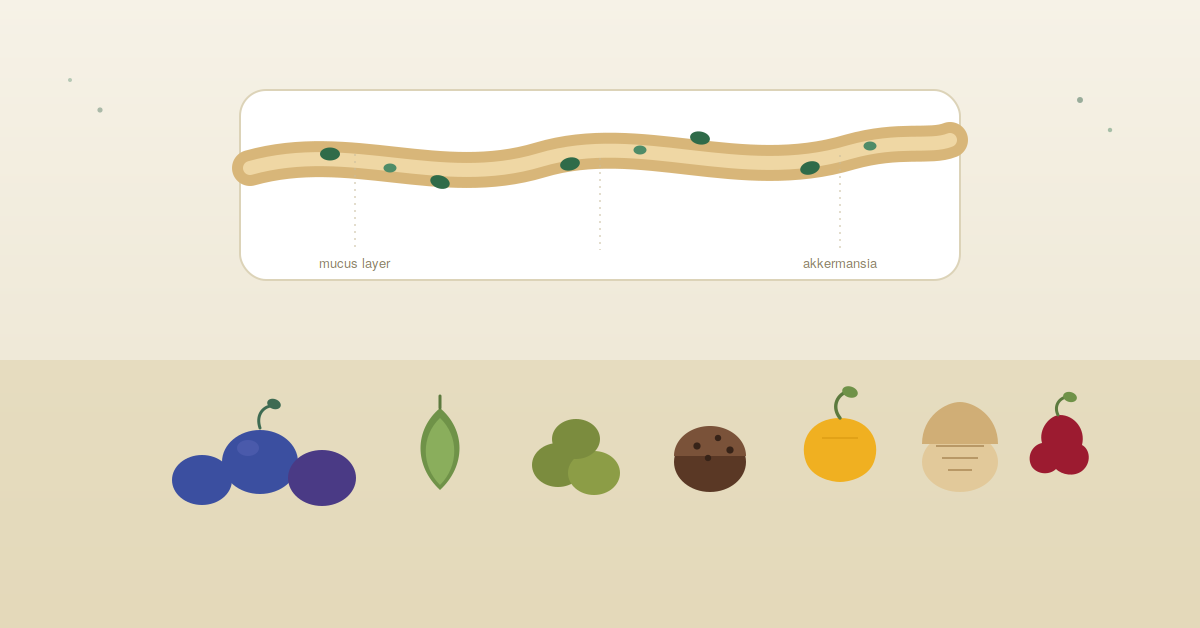
Akkermansia muciniphila is a bacterium that lives in the mucus layer lining your gut — the thin, protective coating that sits between your gut wall and everything passing through your digestive system. In a healthy gut, it typically makes up somewhere between 1 and 5% of total gut bacteria, which sounds small but is actually a substantial presence for a single species.
What makes Akkermansia unusual is what it eats. Rather than feeding primarily on the food you consume, it consumes mucin, the protein that makes up your gut’s mucus lining. This sounds like it should be a problem, but it appears to work the opposite way. When Akkermansia breaks down old mucin, it signals your intestinal cells to produce fresh mucin in response, which keeps the protective barrier renewed and intact rather than depleted. In the process, it also produces short-chain fatty acids, the same beneficial compounds produced when fiber gets fermented by other gut bacteria, which feed your gut lining and other beneficial microbes.
The reason researchers have taken such a strong interest in it is that Akkermansia levels are consistently lower in people with obesity, type 2 diabetes, and inflammatory bowel conditions compared to people without these conditions. That pattern alone doesn’t prove cause and effect, but it was striking enough, and consistent enough across studies, to justify a serious research effort to find out whether boosting Akkermansia could actually improve those conditions.
The Human Trial That Changed the Conversation
For years, most of the genuinely compelling Akkermansia research was done in mice, which is a real limitation — plenty of things that work beautifully in mice fail to translate to humans. That changed with a landmark study that’s now considered the turning point for this entire research area.
Researchers gave overweight, insulin-resistant adults a pasteurized form of Akkermansia daily for three months, comparing the results against a placebo group. The supplemented group showed improved insulin sensitivity, reduced fasting insulin, and lower total cholesterol, along with modest reductions in body weight. Interestingly, the pasteurized (heat-killed) version of the bacteria performed at least as well as live Akkermansia in earlier animal research, which matters practically, since pasteurized bacterial products are generally easier to manufacture, store, and regulate as a supplement than live ones.
That single study moved Akkermansia from “an interesting correlation seen in mouse studies” to “an intervention with actual human evidence behind it” — and it opened the door for the wave of research that followed.
The 2025 Discovery That Adds an Important Nuance
More recent research has added a detail that genuinely matters if you’re trying to understand whether this is relevant to you personally.
A 2025 randomised controlled trial published in Cell Metabolism, conducted by researchers at Ruijin Hospital affiliated with Shanghai Jiao Tong University, tested Akkermansia supplementation specifically in people with overweight or obesity who also had type 2 diabetes. The key finding was that efficacy depended heavily on a person’s starting Akkermansia level. Participants who began the trial with low Akkermansia levels saw meaningful metabolic improvements. Participants who already had adequate levels of the bacterium saw essentially no additional benefit from supplementing.
This is a genuinely important nuance, and it’s the kind of detail that tends to get lost in oversimplified health content. It suggests Akkermansia supplementation isn’t a universal metabolic booster that helps everyone equally — it’s more likely to help specifically correct a deficiency in people who don’t have enough of it to begin with, which is a more modest, more biologically sensible claim than “this bacterium will improve everyone’s metabolism.”
A separate trial looking at weight maintenance after initial weight loss found a similar pattern. Over a 24-week maintenance period, people taking pasteurized Akkermansia regained significantly less weight than the placebo group (roughly 1.2 kg regained versus 3.2 kg), and the benefit again showed up most clearly in people with lower starting levels of the bacterium.
Beyond Weight and Blood Sugar — Where the Research Is Heading
While metabolic health is where Akkermansia has the strongest human evidence, researchers are now investigating its role in a wider range of conditions, and it’s worth knowing how early-stage this broader research still is.
Studies have found associations between Akkermansia and gut barrier integrity specifically — the bacterium appears to help maintain the structural strength of the gut lining, which connects to its role in reducing the kind of low-grade chronic inflammation linked to multiple health conditions. Research into inflammatory diseases more broadly is active and ongoing, with reviews describing Akkermansia as a promising “next-generation probiotic” for inflammation-related conditions, though much of this work is still at the mechanistic and early-clinical stage rather than large confirmed human trials.
Some of the more recent and more speculative research threads include investigations into brain health, muscle function, and even a possible role in how well certain cancer immunotherapies work — an area that’s generating real scientific interest but remains far too early to draw any practical conclusions from.
What the Research Doesn’t Yet Show — The Honest Limitations
This is the part of the Akkermansia story that supplement marketing tends to skip, and it’s worth taking seriously.
A comprehensive 2025 review specifically titled its analysis “Far from Perfect,” and that title is an accurate summary of where the science currently stands. Causality has been clearly demonstrated in animal models, but in humans, most of the relationship between Akkermansia and health outcomes is still observational — people with certain conditions tend to have lower levels of it, but proving that low Akkermansia causes those conditions, rather than simply being a side effect of them, is much harder to establish.
Strain variability is a real practical issue too. Not all Akkermansia is the same, and the specific strain used in the clinical trials (often referred to as MucT) is not necessarily the same as what might be present in an unregulated commercial supplement. A review on the topic noted explicitly that the strongest evidence applies to specific tested strain preparations at specific doses, not to generic or undisclosed commercial formulations sold under the Akkermansia name.
Human intervention studies, while growing in number, are still relatively few compared to the much larger body of animal research. The overall picture is genuinely promising and the trajectory of the evidence is moving in a positive direction, but “promising and improving” is a different and more honest claim than “proven.”
Can You Actually Boost Your Akkermansia Levels Through Food
Here’s an important technical point that’s easy to misunderstand: you cannot get Akkermansia itself from food. It’s not present in fermented foods or any dietary source the way Lactobacillus or Bifidobacterium strains are. It lives specifically in the gut’s mucus layer and isn’t something you eat directly.
What you can do is eat in a way that creates favourable conditions for the Akkermansia you already have to thrive and multiply. Two categories of food appear most consistently across the research for this purpose.
Polyphenol-rich foods seem to be one of the strongest dietary levers available. Berries, particularly darker ones like blueberries, blackberries, and cranberries, are rich in the specific polyphenol compounds, including ellagic acid and proanthocyanidins, that research has linked to Akkermansia growth. Green tea catechins, pomegranate, grapes (especially with skin on), and dark chocolate with a high cocoa percentage have shown similar associations in the research.
Prebiotic fiber sources are the second major lever. Foods rich in inulin and resistant starch, including onions, garlic, leeks, asparagus, and chicory root, feed the broader fermentation processes in the gut that support an environment where Akkermansia and other beneficial bacteria can flourish. Apples, eaten with the skin on for the pectin content, and a general diet rich in whole grains, legumes, and vegetables round out the dietary approach that current research most consistently points toward.
It’s worth noting what tends to work against Akkermansia too. Diets very low in fiber and polyphenols, heavy in highly processed foods, or built primarily around the kind of strict low-carb, high-fat eating pattern sometimes adopted for other health reasons, may inadvertently starve the gut environment Akkermansia depends on.
Should You Consider an Akkermansia Supplement
Given how new and strain-specific this research area still is, this deserves a measured answer rather than a simple yes or no.
If you have a diagnosed metabolic condition, such as insulin resistance, prediabetes, or type 2 diabetes, and particularly if gut testing has indicated low Akkermansia levels specifically, there’s now genuine clinical trial evidence, including a 2025 study, that targeted supplementation may provide measurable benefit — and this is a conversation worth having with a healthcare provider who can interpret your specific situation.
If you’re generally healthy with no diagnosed metabolic concerns, the research so far suggests your starting Akkermansia level matters more than simply taking a supplement regardless of where you’re starting from — and the 2025 Cell Metabolism trial specifically found no additional benefit in people who already had adequate levels. For most people without a specific diagnosed need, focusing on the dietary approaches above is the more evidence-aligned and lower-cost starting point.
If you do consider a supplement, strain transparency matters. Look for products that specify the actual bacterial strain used (such as MucT) and reference the dose used in published clinical research, rather than products that simply list “Akkermansia muciniphila” without further detail.
The Bottom Line
Akkermansia muciniphila has earned its place in serious gut health conversations, and that’s a meaningfully different statement than saying it’s a guaranteed fix for metabolic problems. The human clinical evidence has gone from essentially nonexistent a decade ago to a real, if still developing, body of research, including randomised controlled trials published in serious journals as recently as 2025 and 2026.
The most honest summary of where things stand: Akkermansia appears to matter most for people who don’t have enough of it, the strongest evidence applies to specific studied strains rather than generic supplements, and diet remains a legitimate, well-supported way to support your levels of it naturally. The research is moving quickly, and what’s considered settled science here in another two years may look quite different from today — which is exactly why it’s worth following the actual studies rather than the headlines about them.
This article is for informational purposes only and does not constitute medical advice. If you have a diagnosed metabolic condition or are considering a probiotic supplement for a specific health concern, speak with a qualified healthcare professional before starting.