
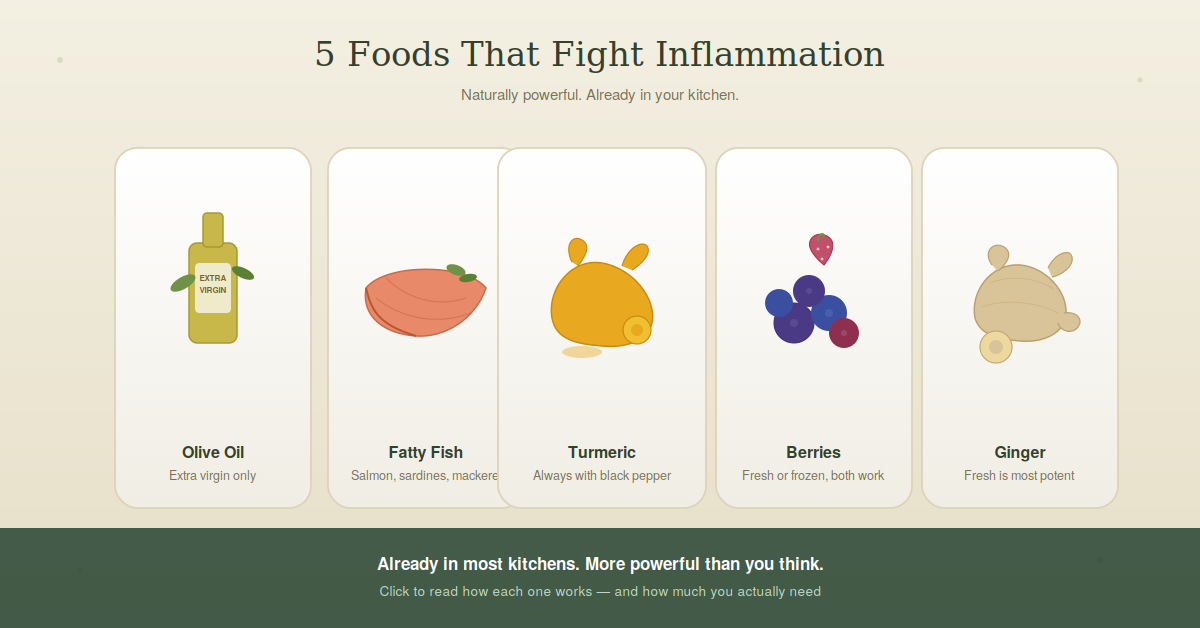
Looking for foods that fight inflammation naturally? What you eat can play an important role in supporting your body’s normal inflammatory response. While no single food can eliminate inflammation or replace medical treatment, a diet rich in minimally processed foods, healthy fats, fiber, and plant-based nutrients may help support overall health. From colorful berries and leafy greens to fatty fish and extra virgin olive oil, adding the right foods to your regular meals can be a simple and practical step toward a more balanced diet.
Inflammation is behind more of your daily aches than you probably realise. That stiffness in your knees when you get up in the morning. The bloated feeling after certain meals. The low-level fatigue that just won’t shift.
Most people reach for a painkiller and move on. And that’s fine for the occasional bad day. But if you’re dealing with inflammation regularly, the better long-term move is changing what you put on your plate.
The good news is that some of the most powerful anti-inflammatory foods aren’t exotic or expensive. Most of them are already sitting in your kitchen or your local supermarket, waiting to do a lot more than you’ve been asking of them.
Here are five of the best — what they do, why they work, and the easiest ways to actually eat more of them.
1. Extra Virgin Olive Oil
If there’s one swap that makes an immediate difference to inflammation levels, it’s switching your cooking oil to proper extra virgin olive oil — and using enough of it.
The key is “extra virgin.” This isn’t the same as regular olive oil or “light” olive oil. Extra virgin olive oil is cold-pressed and unrefined, which means it retains a compound called oleocanthal that cheaper versions simply don’t have.
Oleocanthal is what gives good olive oil that slight peppery kick at the back of your throat. That sensation is actually a sign it’s working — the same biological pathway that makes ibuprofen reduce inflammation. The stronger the sting, the more of this compound your oil contains.
Beyond that, extra virgin olive oil is rich in polyphenols — plant compounds that actively calm the inflammatory processes running in the background of your body. It’s one of the cornerstones of the Mediterranean diet, which is consistently rated the most anti-inflammatory eating pattern in existence.
How to eat more of it: Use it as your go-to cooking fat for low and medium heat cooking. Drizzle it over salads, roasted vegetables, and soups. Dip bread into it instead of using butter. Aim for two to four tablespoons a day rather than a stingy drizzle.
2. Fatty Fish
Salmon, sardines, mackerel, anchovies — these are the anti-inflammatory heavyweights of the food world, and most people don’t eat nearly enough of them.
What makes fatty fish different from other protein sources is their omega-3 fatty acid content. Specifically a type called EPA and DHA, which your body uses to produce its own natural anti-inflammatory compounds. These directly dial down the inflammatory signals circulating in your body — signals that, when left unchecked, contribute to joint pain, cardiovascular stress, and accelerated aging.
The frustrating truth is that most people’s diets are heavily weighted toward omega-6 fatty acids, found in vegetable oils and processed foods, and much lighter on omega-3s. That imbalance tips the body toward a more inflammatory state by default. Eating fatty fish regularly helps rebalance it.
Canned sardines and mackerel are some of the cheapest, most convenient sources available — and nutritionally, they’re just as good as fresh. A tin of sardines on wholegrain toast is a genuinely excellent anti-inflammatory lunch.
How to eat more of it: Aim for two to three portions of oily fish per week. Canned counts. Swap your lunchtime chicken for a tin of sardines a couple of times a week, add smoked salmon to scrambled eggs, or make mackerel pâté for an easy starter.
3. Turmeric
Turmeric has become one of the most talked-about spices in health circles, and for once the reputation is mostly deserved.
The active compound in turmeric is curcumin, and it’s a genuinely potent anti-inflammatory agent. It works by blocking several of the inflammatory pathways that drive chronic low-grade inflammation — the same pathways that NSAIDs like ibuprofen target, just through a different route.
The issue most people run into is absorption. Curcumin on its own doesn’t absorb well through the digestive system. Two things dramatically improve this: eating turmeric with black pepper, which contains a compound called piperine that increases curcumin absorption significantly, and eating it with fat, since curcumin is fat-soluble.
A golden milk latte made with turmeric, black pepper, and full-fat milk or coconut milk ticks both boxes and is genuinely pleasant to drink. So does adding turmeric to a curry or soup cooked in olive oil or coconut oil with plenty of black pepper.
How to eat more of it: Add a teaspoon of turmeric and a pinch of black pepper to scrambled eggs, curries, soups, and rice dishes. Make a golden milk before bed — warm milk, turmeric, ginger, a pinch of black pepper, and a little honey. Use it regularly rather than occasionally for the best results.
4. Berries
Blueberries, strawberries, raspberries, blackberries — all of them are among the most anti-inflammatory foods you can eat, and most people underestimate how powerful they are.
Berries are packed with a group of plant compounds called anthocyanins — the pigments that give them their deep red, blue, and purple colours. These compounds are potent antioxidants that directly neutralise the oxidative stress that drives inflammation in the body.
They’re also one of the best foods for supporting gut health, and since gut health and inflammation are closely connected, this matters more than most people realise. A healthier gut lining means fewer inflammatory compounds leaking into the bloodstream, which means lower overall inflammation throughout the body.
One of the most useful things about berries is that frozen berries are just as nutritionally valuable as fresh ones. In some cases they’re even better, because they’re frozen immediately after harvest at peak ripeness. This makes them accessible year-round without the cost of fresh summer berries out of season.
How to eat more of them: Add a large handful to your morning yoghurt or porridge. Blend them into smoothies. Keep a bag of frozen mixed berries in the freezer and stir them through overnight oats. Eat them as an afternoon snack instead of something processed and sugary.
5. Ginger
Fresh ginger is one of the most underused anti-inflammatory ingredients in most kitchens, and it’s worth making a habit of reaching for it regularly.
Ginger contains several active compounds — most notably gingerols and shogaols — that work on the same inflammatory pathways as many conventional anti-inflammatories. It’s particularly well-regarded for reducing joint pain and muscle soreness, and for its effects on gut inflammation, which is why it’s been used for digestive issues across cultures for centuries.
It’s also one of the most versatile ingredients you can keep on hand. It pairs with savoury dishes, teas, smoothies, and desserts equally well, and a small amount goes a long way in terms of both flavour and effect.
Fresh ginger is more potent than dried or powdered, though both offer benefits. A thumb-sized piece grated into a stir-fry or a mug of hot water with lemon is one of the simplest daily habits you can build for your inflammatory health.
How to eat more of it: Grate fresh ginger into stir-fries, soups, and marinades. Make ginger tea by slicing a few pieces of fresh ginger into hot water with lemon and honey. Add it to smoothies alongside turmeric for a double hit. Keep a knob of fresh ginger in your freezer — it grates perfectly from frozen and lasts for months.
How to Actually Make This Work Day to Day
Eating more anti-inflammatory foods isn’t about a dramatic diet overhaul. The foods above work cumulatively — the more consistently you include them, the more your body’s baseline inflammatory state shifts downward over time.
A realistic starting point looks something like this: switch your cooking oil to extra virgin olive oil today. Add a portion of oily fish to your weekly routine twice this week. Keep a bag of frozen berries in the freezer. Buy a piece of fresh ginger and actually use it.
Small changes across multiple meals add up to a meaningfully different inflammatory environment in your body — without requiring you to eat anything expensive, unusual, or unpleasant.
Easy Ways to Add More Anti-Inflammatory Foods to Your Day
You don’t need to completely redesign your kitchen. Try making a few simple swaps:
- Add berries to breakfast instead of a sugary topping.
- Keep a small portion of unsalted nuts available for snacking.
- Use extra virgin olive oil in homemade salad dressings.
- Add spinach or kale to soups, omelets, or sandwiches.
- Replace one meat-based meal each week with fatty fish.
- Add ground flaxseed or chia seeds to oatmeal or yogurt.
- Build meals around vegetables, whole grains, and a source of protein.
Small changes tend to be easier to maintain than dramatic dietary overhauls.
What to Eat Less Of
This part matters just as much as the list above. Adding anti-inflammatory foods while continuing to eat heavily from the pro-inflammatory column limits how much difference you’ll notice.
The biggest drivers of dietary inflammation are refined carbohydrates and sugar, ultra-processed foods, vegetable oils high in omega-6 (sunflower oil, corn oil), and excess alcohol. None of these need to disappear entirely — but if they’re the foundation of most of your meals, the five foods above are working against the current rather than with it.
Think of it as tilting the balance rather than pursuing perfection. More olive oil, more fatty fish, more berries, more turmeric and ginger — and a little less of the things that are actively fanning the flames.
Final Thoughts
The best foods that fight inflammation are not necessarily exotic ingredients or expensive supplements. Many are simple foods you can find at a regular grocery store, including berries, leafy greens, fatty fish, nuts, seeds, and extra virgin olive oil.
The bigger goal is to build an eating pattern that regularly includes a wide variety of minimally processed, nutrient-dense foods. While diet alone cannot treat every cause of inflammation, making these foods part of your routine can support overall nutrition and may contribute to better long-term health.
If you have persistent inflammation, unexplained pain, swelling, digestive problems, or other ongoing symptoms, it’s important to speak with a healthcare professional rather than relying solely on dietary changes.
This article is for informational purposes only and does not constitute medical advice. If you have a diagnosed inflammatory condition or are taking anti-inflammatory medication, speak with your healthcare provider before making significant dietary changes.